

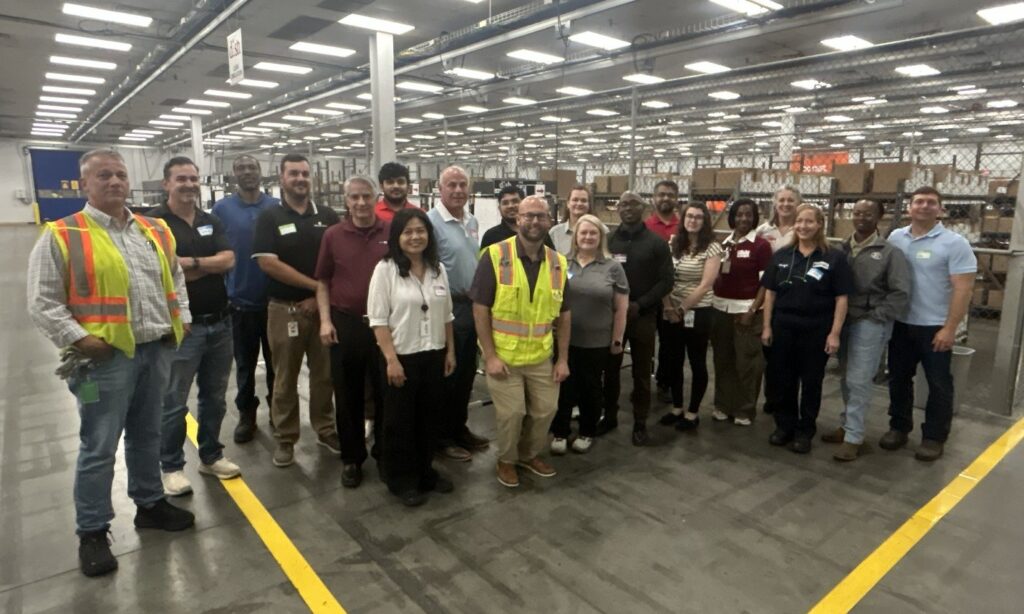
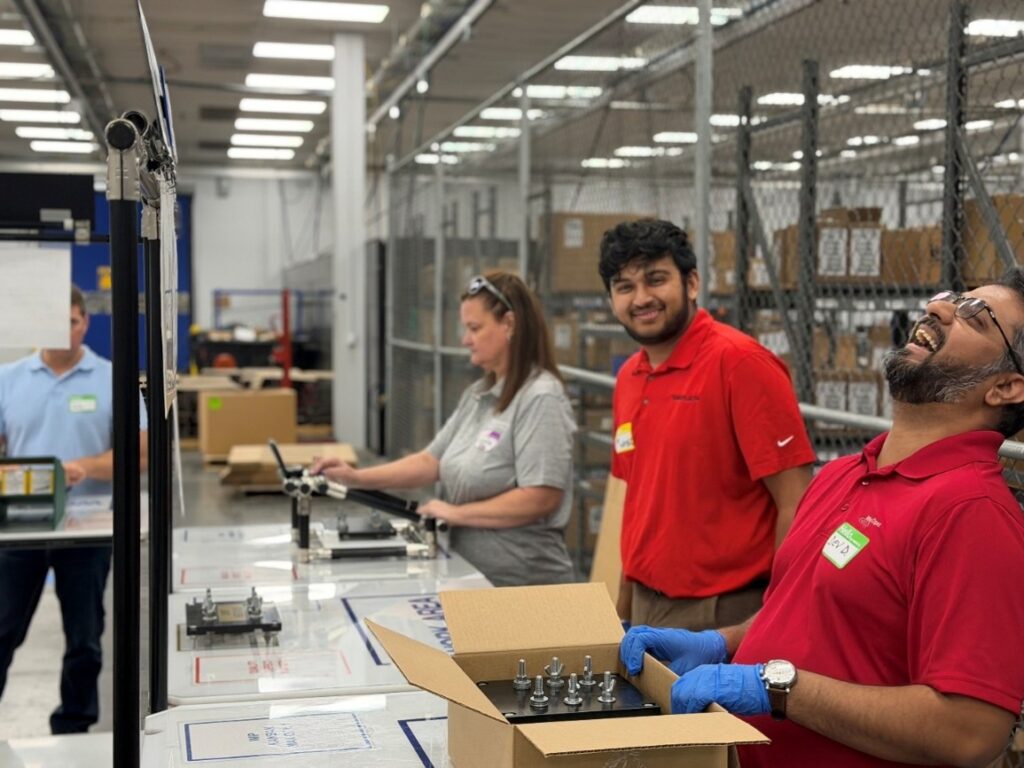
OpExChange members recently traveled from across South Carolina to DISH’s Spartanburg operation for an immersive, four-hour Lean Simulation Training event hosted by Brian Harris, General Manager of DISH Spartanburg, and led by Mela Ly, Continuous Improvement Manager. Together, Brian and Mela guided participants through an experience intentionally designed to move beyond classroom instruction and into real-world application of Lean principles through simulation, discussion, and hands-on learning.
The afternoon served as another reminder of what makes OpExChange unique. While the training itself delivered valuable learning opportunities, the event also reinforced the importance of peer networking, benchmarking, and open sharing among manufacturers and operational leaders. As participants introduced themselves and shared backgrounds, the focus remained clear: learning from one another and building relationships that extend beyond a single event.
A 19-Year Journey of Continuous Improvement
Many participants arrived expecting Lean simulation training but quickly realized they were also getting a look inside an organization that has spent nearly two decades intentionally building a culture centered around operational excellence.
DISH Spartanburg joined the OpExChange in September 2007 and has remained an active participant for nearly 19 years, contributing not only through learning opportunities but also by hosting events, sharing experiences, and supporting peer manufacturers across South Carolina.
The Spartanburg site began production in 2006 and has spent much of its history on a continuous improvement journey. Today, the operation reflects the results of that long-term investment in people and process, with an average employee tenure of approximately 15 years.
Over that time, the operation transformed from a high-volume, low-mix environment into a much more diverse operation supporting lower-volume, higher-mix work while expanding capabilities across manufacturing, logistics, testing, packaging, cable and enclosure services, electronics remanufacturing, and kitting.
One of the foundational principles behind this evolution has been respect for people, a core element of the Toyota Production System that DISH intentionally embraced throughout its Lean journey. That investment in people became visible throughout the day. Brian Harris began his career as an inventory auditor. Mela Ly started as a material handler. Their growth stories reinforced a culture where development, opportunity, and continuous learning are deeply embedded.
As Eric Clark, Operations Excellence Leader with HB Fuller, observed during discussion:
“It seems like you guys would have been out of business five different times if you weren’t doing lean.”
Eric’s comment highlighted an important truth for Lean practitioners: continuous improvement is not only about efficiency. It is often what enables organizations to survive, adapt, and grow through change.
Building Leaders and High-Performing Teams
Participants quickly recognized that DISH’s Lean journey extends well beyond tools, events, and metrics. Leadership engagement emerged as one of the strongest themes throughout the visit.
Brian Harris and Mela Ly remain deeply involved in employee development, simulation training, and cultural initiatives across the organization. Their visibility throughout the event reinforced a philosophy that sustaining Lean cannot be delegated solely to operational excellence teams. Leaders must actively participate.
DISH’s investment in people development extends throughout the organization. The site currently supports 28 Green Belts, five Black Belts, and one Master Black Belt while embedding Lean exposure into onboarding, development pathways, and career progression.
The organization has also expanded its focus beyond technical capability development. Recent initiatives have included leadership participation in The Five Behaviors of High Performing Teams training along with extensive use of DISC behavioral profiles to strengthen communication and collaboration. Leadership DISC profiles are openly shared throughout the facility, helping employees better understand how teammates communicate, make decisions, and solve problems.
This emphasis on leadership and people development reinforces a broader belief at DISH: operational excellence is sustained through culture, not just tools.
Why Simulation Instead of Traditional Training?
DISH’s philosophy is simple: Lean concepts are easier to understand when employees experience them rather than simply hearing about them.
As Brian Harris explained, the organization intentionally exposes employees to Lean concepts early in their careers to create common language and shared understanding across the organization:
“Day one, we still want to bring folks in, run them through this lean simulation so that they understand what we do, why we do it, and how we do the things that we do.”
The simulation experience is integrated directly into onboarding and development processes. New hires, contractors, engineers, supervisors, leaders, and even contract employees participate because the organization wants employees speaking the same operational language from day one.
Concepts such as Kaizen, Kanban, waste elimination, and rapid improvement events become easier to understand when participants physically experience the challenges those tools are designed to solve.
Mela explained that simulation training serves as an entry point. Once employees understand concepts through application, they can then move deeper into specific Lean tools and methodologies.
The Lean Simulation Experience
The training centered around DISH’s internally developed simulation environment called “Widgets Inc.,” a mock manufacturing environment intentionally designed with inefficiencies, bottlenecks, communication gaps, inventory buildup, and process variation.
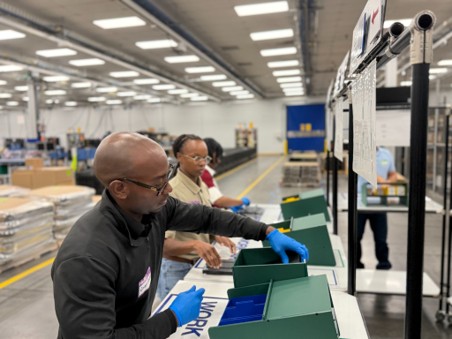
Participants were divided into teams and assigned production roles to simulate an actual production environment. The simulation intentionally created discomfort at times because that discomfort became the learning opportunity.
Early rounds produced many of the same problems seen daily inside manufacturing operations:
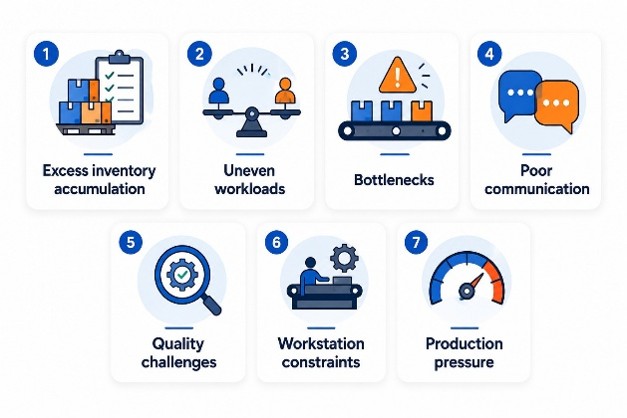
Participants observed firsthand how quickly work-in-process inventory accumulated and how rapidly operators became overloaded when flow became unbalanced.
As teams adjusted layouts and introduced Lean tools, performance improved through pull systems, single-piece flow, work balancing, visual management, improved communication, and waste reduction.
The repeated cycles of execute → reflect → improve closely mirrored the Kaizen philosophy itself. Participants quickly discovered that concepts such as flow, waste elimination, and workload balancing become much easier to understand when they experience the challenges firsthand rather than discussing them theoretically. Brian summarized,
“It’s real easy to sit in here and talk about it. It’s another thing to start applying it and seeing it in a true application.”
Continuous Improvement is a Culture, Not a Department
One of the strongest themes throughout the afternoon centered around ownership. Participants asked how engineering, maintenance, and support functions become integrated into improvement activities.
Brian explained that DISH intentionally avoids creating a culture where Lean belongs only to an operational excellence team. Instead, employees across functions receive exposure to Lean principles and are expected to participate in improvement activities, creating shared ownership throughout the organization. Supervisors lead Kaizen events. Operations teams lead rapid improvement events. Engineers actively participate in problem solving and Gemba activities. The expectation is broad engagement across the organization.
This philosophy was summarized repeatedly throughout the event:
Every employee is expected to think like a process owner.
The message hit home with participants because many organizations struggle when Lean becomes isolated within staff functions rather than embedded into operational ownership.
Sustaining Lean: The Hardest Part
One of the strongest discussions of the afternoon centered around sustainment. While training provides the foundation, participants repeatedly explored a more difficult question: what happens when employees return to normal production pressures and daily routines?
As Mela challenged participants:
“Am I a believer for that five-minute or four-hour session, or am I going to be a believer throughout this whole shift?”
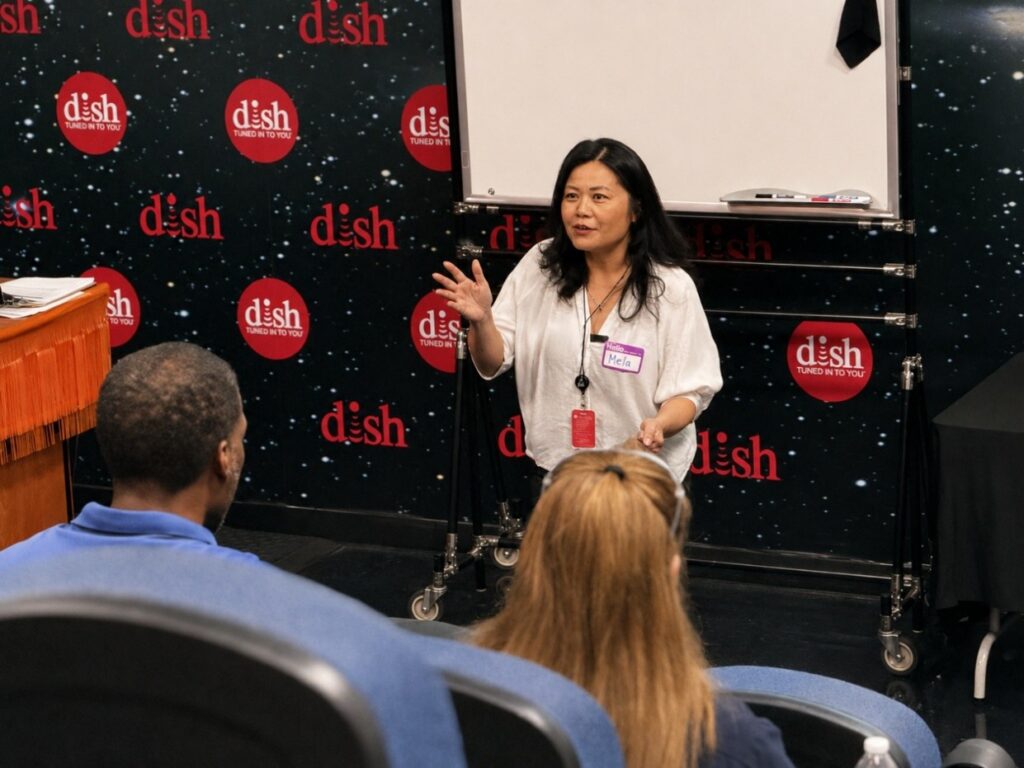
The comment hit home because many organizations struggle not with introducing Lean concepts, but with sustaining behaviors once employees return to competing priorities and operational pressures.
Discussion sessions after each simulation round produced some of the richest conversations of the afternoon as participants explored one of Lean’s most difficult questions:
How do organizations sustain behaviors after training ends?
For DISH, the answer consistently returned to leadership reinforcement, supervisor engagement, and continual exposure to Lean behaviors.
Participants discussed how supervisors often become the deciding factor in sustainment efforts. Operators may understand Lean principles, but conflicting signals from leadership can unintentionally drive old behaviors back into the system.
The conversation also emphasized that inventory buildup and workarounds frequently communicate system problems rather than employee problems. Teams were encouraged to investigate root causes rather than assume resistance.
Continuing the Learning Beyond the Event
One message that consistently surfaced throughout the afternoon was that continuous improvement works best when organizations openly share ideas, successes, and lessons learned.
Recognizing that many organizations struggle with how to effectively teach Lean concepts in a practical environment, the DISH team extended an open invitation to fellow OpExChange members interested in developing similar simulation experiences within their own facilities.
DISH shared that they are willing to support other members who may want to create internal simulation programs, learn more about their training approach, or potentially host similar demonstrations within their own organizations. The team emphasized that simulation-based learning has been one of the most effective tools in building common language, reinforcing Lean behaviors, and accelerating employee engagement across all levels of the organization.
This willingness to openly share methods, lessons learned, and training approaches perfectly reflects the spirit of OpExChange: manufacturers helping manufacturers improve together.
Final Thoughts
Perhaps the biggest takeaway from the afternoon was that Lean cannot simply exist as a project, initiative, or department.
Organizations that sustain Lean over decades create cultures where everyone participates, leaders reinforce behaviors daily, and improvement becomes part of normal work.
DISH Spartanburg demonstrated that this type of culture is built through repetition, engagement, practical application, and a willingness to continuously improve.
And perhaps most importantly, they reminded participants that learning Lean should still be fun.
About DISH Spartanburg
Located in Spartanburg, South Carolina, DISH Spartanburg has evolved into a diverse operation supporting logistics, remanufacturing, fulfillment, cable assembly, enclosure integration, testing, packaging, and value-added manufacturing services.
The operation supports activities across a broader ecosystem of brands and businesses associated with DISH and EchoStar, including telecommunications, connectivity, and consumer technology offerings. Many consumers recognize these brands through services such as DISH television products, Boost Mobile, and related communications technologies.
While many still associate DISH primarily with satellite television, the organization today operates across a much broader communications and technology landscape. Participants also learned that many of the capabilities and shared services developed within the operation extend beyond internal business units, supporting external customers and creating opportunities across multiple industries and markets. Feel free to contact Brian Harris, General Manager to learn more: brian.harris@dish.com
About OpExChange
The OpExChange, sponsored by the South Carolina Manufacturing Extension Partnership, is a peer-to-peer network of manufacturers and distributors in South Carolina known for generating success for members through benchmarking and best practice sharing. Member companies host events and share practical examples of industrial automation, lean manufacturing improvements, and leadership development.
It is an invaluable resource to South Carolina companies that provide access to others who are on similar improvement journeys. If your company is interested in participating in this collaborative effort to improve both the competitiveness of your operation and South Carolina, contact Mike Demos (MDemos@scmep.org). More information and upcoming plant visits are available on the OpExChange website www.OpExChange.com.