

By Mike Demos, OpExChange Coordinator for the SCMEP
A couple of weeks ago, OpExChange hosted an HR networking event – one that grew directly from the strong response and ongoing collaboration generated through the Plant Manager ExChange forum. Unlike a traditional OpExChange event, there were no plant tours, production lines, or discussions around automation and equipment investments. Instead, the conversation focused on something even more foundational to manufacturing success: people.
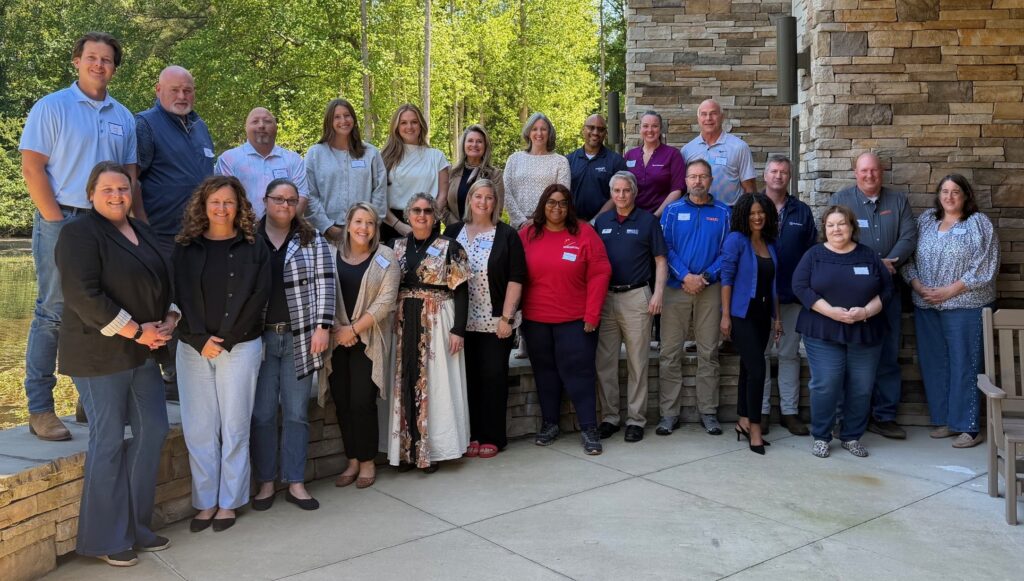
Twenty-three HR leaders from manufacturing organizations across 13 counties in South Carolina, along with peers from North Carolina and Georgia, gathered for a conversation that felt less like a formal event and more like a room full of peers finally getting the opportunity to talk honestly about the challenges they face every day. The event was organized by OpExChange board members Todd Jamison of Phoenix Specialty Mfg. Co., Paul Kabis of Heidelberg Materials, Scott Greene of Southern Fabricators, and Dale McClelland of Timken, who intentionally structured the session to encourage open dialogue and collaboration rather than presentations and lectures.
As introductions moved around the room, participants described organizations of different sizes, structures, and cultures. Some represented large operations with multiple HR resources, while others carried nearly every HR responsibility themselves. Despite those differences, the conversations quickly revealed that many of the challenges sounded remarkably familiar from one company to the next.
The discussions centered around four primary topics selected in advance by the participants themselves. Mandy Baltzegar of Phoenix Specialty Mfg. Co. facilitated conversations around leadership development, Kayden Davis of Southern Fabricators led discussions on employee engagement, John Robbins of Timken facilitated retention discussions, and Shanna Chambers of innovateHR guided conversations around HR’s role in driving business strategy.
Yet as the day unfolded, it became increasingly difficult to separate one topic from another because each conversation kept naturally feeding into the next.
Different Companies. Similar Challenges.
What began during John Robbins’ retention discussions quickly turned into a broader conversation about leadership. Conversations around engagement eventually circled back to communication, trust, and supervisor effectiveness. Even discussions about HR strategy repeatedly returned to the reality that many HR leaders spend much of their day reacting to issues rather than helping shape the future direction of the organization.
At one point during the strategy discussion facilitated by Shanna Chambers of innovateHR, participants were asked how much of their time is truly spent on strategic work. Most answers landed somewhere between twenty and forty percent, with several people acknowledging that even those numbers may have been optimistic. When asked where they believed that number should be, the answers jumped dramatically.
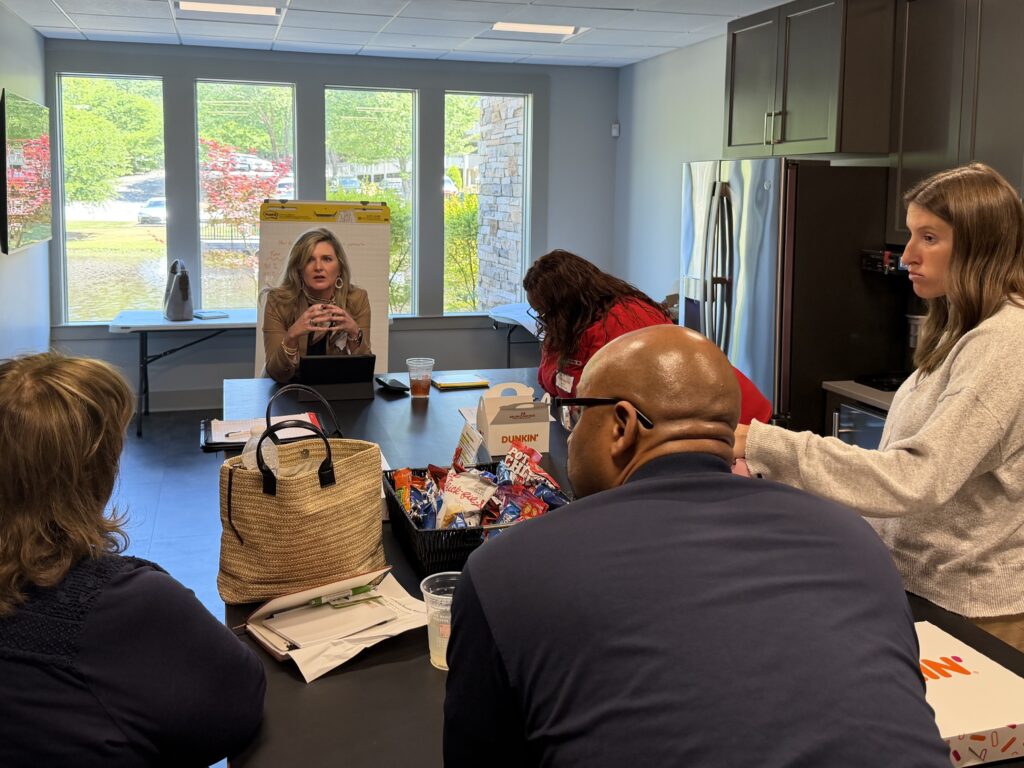
One participant laughed before admitting, “My first hour and a half every day is just putting out fires.”
The comment drew immediate recognition from around the room because nearly everyone understood exactly what she meant. The conversation that followed was not really about time management. It was about the reality of balancing daily operational demands while still trying to move an organization forward strategically.
Another participant offered a perspective that seemed to summarize the tension many HR leaders feel every day.
“If I’m strategizing all the time… who’s executing?”
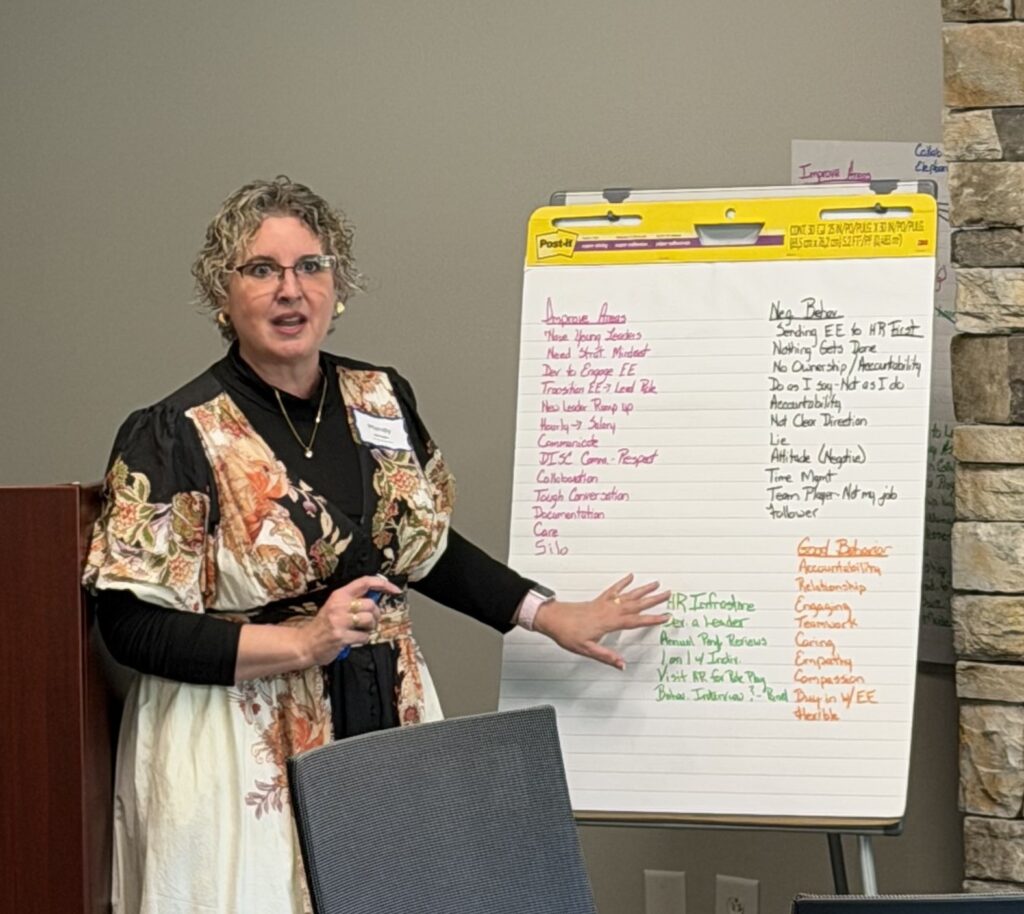
The discussions also revealed how interconnected these challenges really are. During the leadership session facilitated by Mandy Baltzegar of Phoenix Specialty Mfg. Co., participants openly discussed the difficulty of promoting strong technical performers into leadership positions without fully preparing them to lead people. Conversations around communication, accountability, coaching, and difficult conversations surfaced repeatedly, and at one point the room was asked whether anyone had leaders within their organization who did not need development.
Nobody answered.
The silence itself seemed to reinforce what everyone already understood: leadership development is not optional anymore. Nearly every issue being discussed throughout the day – engagement, retention, communication, culture, even HR’s ability to operate strategically – could somehow be traced back to leadership effectiveness.
When Everything Starts Pointing Back to Leadership
As the conversations continued, participants openly discussed the challenges of developing supervisors who are technically strong but struggle to connect with employees on a personal level. Several organizations talked about leaders avoiding difficult conversations, escalating employee issues rather than owning them, or failing to build trust within their teams.
The discussion repeatedly circled back to the same underlying reality: technical expertise may earn someone a leadership role, but it does not automatically prepare them to lead people.
That leadership gap often creates ripple effects throughout the organization. Employees disengage. Turnover increases. HR becomes reactive. Trust erodes between departments and teams.
During Kayden Davis’ engagement discussions, several HR leaders described the importance of walking the floor, knowing employees personally, asking about their families, and creating environments where people feel seen and heard.
One participant shared that employees now notice when they do not walk the floor during the day and begin asking whether something is wrong.
That comment resonated because it reflected a deeper truth about engagement. Employees are not simply responding to programs or incentives. They are responding to whether leadership is genuinely present and connected.
Adapting to a Changing Workforce
As the conversations evolved, participants also spent significant time discussing how dramatically workforce expectations are changing. Several organizations talked about the fading expectation that employees will stay with one company for twenty or thirty years, while others discussed the growing importance of transparency, career development, flexibility, and meaningful communication.
One participant made a comment that shifted the tone of the room in an important way.
“You’re not going to keep people twenty or thirty years anymore… and maybe that’s okay.”
That perspective reframed the conversation from trying to recreate the workforce of the past to understanding how organizations must adapt to the workforce that exists today.
The retention discussions facilitated by John Robbins of Timken reinforced that same point. Participants openly shared the wide variety of approaches companies are using to improve retention – referral bonuses, attendance incentives, flexible schedules, advancement opportunities, recognition programs, and engagement activities. Yet even while discussing compensation and benefits, the conversations consistently returned to culture, leadership, communication, and trust.
Several participants acknowledged that retention is rarely driven by a single issue. Employees often make decisions based on the overall experience they have within an organization and the quality of leadership they encounter every day.
The Ripple Effect Beyond the Event
What made the event particularly valuable, however, extended beyond the discussions themselves.
One of the underlying goals of the HR Leader Exchange was to strengthen relationships between HR leaders across the manufacturing community, creating connections that would continue beyond a single event. By the end of the day, that process was already beginning to happen naturally. Conversations continued between sessions, contact information was exchanged, and several participants were already discussing follow-up conversations and future collaboration opportunities.
Within OpExChange, this is increasingly becoming known as the OpExChange “Ripple Effect.”
The greatest value of many events does not always occur during the scheduled session itself. It often begins afterward, when participants continue conversations, benchmark with one another, visit each other’s facilities, and build relationships that create long-term collaboration.
That same ripple effect recently emerged from one of the OpExChange Plant Manager Exchanges, where relationships formed during the forum later turned into direct benchmarking visits between manufacturers.
By the end of the afternoon, many of those same connections were already beginning to form here as well.
By the end of the day, the four discussion topics no longer felt like separate conversations. Leadership, engagement, retention, and strategy had become part of a much larger discussion about culture, people, and organizational health. Just as importantly, many of the HR leaders in the room appeared to leave with something equally valuable – the realization that the challenges they are facing inside their organizations are not unique to them alone.
Given the level of participation and the conversations that emerged throughout the day, another HR Leader Exchange will likely occur later this year. Based on what developed during this session, that continuation feels less like a follow-up event and more like the continuation of relationships and conversations that are already beginning to take shape.
About OpExChange
The OpExChange, sponsored by the South Carolina Manufacturing Extension Partnership, is a peer-to-peer network of manufacturers and distributors in South Carolina known for generating success for members through benchmarking and best practice sharing. Member companies host events and share practical examples of industrial automation, lean manufacturing improvements, and leadership development. It is an invaluable resource to South Carolina companies that provide access to others who are on similar improvement journeys. If your company is interested in participating in this collaborative effort to improve both the competitiveness of your operation and South Carolina, contact Mike Demos (MDemos@scmep.org). More information and upcoming plant visits are available on the OpExChange website www.OpExChange.com.
FAQ
Why did OpExChange create an HR Leader ExChange?
The HR Leader ExChange was created in response to the strong engagement and ongoing collaboration that emerged from the OpExChange Plant Manager ExChange forum. The goal was to create a similar peer-driven environment where manufacturing HR leaders could openly discuss workforce challenges, leadership development, retention, engagement, and HR strategy with others facing many of the same issues.
What made this event different from a traditional OpExChange event?
Unlike many OpExChange events that focus on plant tours, operational excellence initiatives, automation, or manufacturing technology, this session focused entirely on people, culture, and leadership. The format was intentionally built around open discussion and peer collaboration rather than formal presentations.
What topics were discussed during the event?
Participants rotated through discussions focused on:
- Leadership development
- Employee engagement
- Retention
- HR’s role in driving business strategy
As the day progressed, many participants realized these topics were deeply interconnected and often traced back to leadership, communication, and organizational culture.
What is the “Ripple Effect” mentioned during the event?
The “Ripple Effect” refers to the ongoing collaboration that continues after an OpExChange event ends. Relationships formed during these sessions often lead to benchmarking visits, follow-up conversations, resource sharing, and peer support between manufacturers. Several of those connections were already beginning to form during this HR Leader ExChange.
Will there be another HR Leader ExChange?
Yes. Based on the level of engagement and feedback from participants, another HR Leader ExChange is expected to be held later this year.
Where can manufacturers find additional workforce development resources?
One recommended resource discussed alongside these workforce-related conversations is the Workforce Development Playbook from the South Carolina Manufacturing Extension Partnership (SCMEP). The playbook is available as a complimentary download and includes practical strategies and ideas related to workforce development, leadership, engagement, and retention.