

By Mike Demos, OpExChange Coordinator for the SCMEP
As the coordinator of the OpExChange, I had the opportunity to attend MX.0 Southeast 2026 in Greenville, South Carolina – and from the moment the week began, it was clear that this event was a clear extension of what we strive to do every day.
A core mission of the OpExChange is to make South Carolina’s manufacturing ecosystem more competitive. We do that by creating opportunities for manufacturers to share, benchmark, and learn from one another in an open, trust-based environment.
MX.0 Southeast delivered exactly that – just at a larger scale spread across three days.
In fact, over 50% of the attendees were active OpExChange members, and many of those same companies stepped forward to present, lead discussions, and share their experiences. Throughout the week, there was a consistent sense of openness and collaboration that closely mirrored the culture we have built within the OpExChange community. As one attendee shared with me, “It felt like the OpExChange – on a much larger stage.”
Kicking Off the Week: SEW Eurodrive Plant Tour
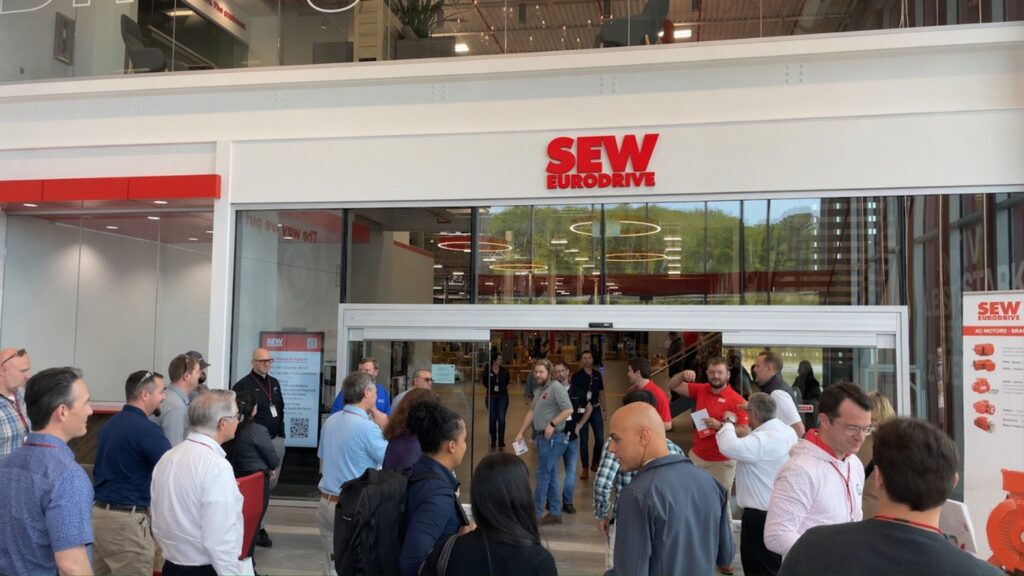
The week began with a standout experience hosted by SEW Eurodrive – an OpExChange member – which set the tone for everything that followed.
Attendees were given the opportunity to tour both SEW’s manufacturing operation and their SMART assembly facility, followed by a social hour that allowed for deeper connection and conversation.
What made this visit particularly valuable was the contrast between the two environments.
In the traditional manufacturing areas, precision, accountability, and traceability were clearly embedded into the culture. Components could be traced back to individual operators, reinforcing ownership and driving quality. One of the participants commented on the engagement at SEW – “You can feel the accountability on the floor – people own their process.”
In the SMART assembly facility, digital connectivity enabled real-time visibility and a more fluid, responsive workflow. Information moved seamlessly across operations, allowing teams to respond quickly and stay aligned. Everything is connected, but it was simple enough for the team to use.
What stood out was not the difference between the two – but how well they complemented each other. One emphasized craftsmanship and discipline, while the other emphasized connectivity and flow.
It was a powerful reminder that transformation is not about replacing what works – it is about enhancing it.
Just as important, the plant tour created immediate opportunities for conversation. Throughout the visit and the social hour, manufacturers were already discussing what they saw, asking questions, and in several cases, beginning to plan follow-up visits.
That is exactly what the OpExChange is designed to do, and we are grateful to have SEW Eurodrive actively engaged both within the OpExChange community and as a key contributor to MX.0 Southeast.
A Conference Built on Sharing and Benchmarking
Over the course of the multi-day conference, attendees participated in technical sessions, panels, and roundtable discussions that covered a wide range of topics – from AI and data strategy to culture, workforce engagement, and operational execution.
What stood out most was not just the content, but the willingness of companies to share openly.
Many OpExChange members shared with me directly how valuable the experience was – not just because of what they learned in sessions, but because of the conversations that happened between sessions.
“The sessions were strong, but the conversations between them were just as valuable.”
The ability to compare notes, discuss challenges, and connect with peers facing similar issues is where the real value emerged.
A Strong Presence from OpExChange Members Throughout the Event
One of the highlights of the event was seeing so many OpExChange member companies actively contributing to the program.
A sincere thank you to the following companies and individuals who stepped up to share their experiences:
- Atlas Copco – Vishal Nigade and Tom Wehrkampf
- BMW – Peterson Lindo
- BorgWarner – Trent Randles
- Michelin – Jeff Jordan
- MKS Instruments – Barrett Hopper
- Northern Tool + Equipment – Amanda Stukitz
- Otis Elevator – Jolly Ehiabhi
- Schaeffler – Karthikk Munirathinam
- SEW Eurodrive – Jeremy McCullough (and all the folks at the plant)
- Trane Technologies – Rashmi Vadlakonda, Mary Kimani, Tyrone Ellis
These are not theoretical sessions – they are real-world experiences shared and discussed by practitioners.
Top Takeaways from an OpExChange Perspective
Start with the Problem – Not the Technology
Organizations that started with clearly defined problems – like weld inspection at BMW or inventory accuracy at Atlas Copco – moved faster and saw results sooner. Those starting with tools often struggled to gain traction.
What became clear throughout the conference is that technology works best when it is tightly scoped to a specific operational challenge. When teams understand the problem deeply, they are able to design solutions that fit the environment and deliver measurable results. Without that clarity, even strong technology can feel disconnected from the work.
AI Success Depends on Data Discipline
“Humans can work around bad data. AI can’t.” – Matt Neal, HiveMQ
AI initiatives succeed or fail based on data quality. Organizations making progress are investing heavily in data structure and governance before scaling.
This was one of the most consistent messages across sessions. Many companies have the tools, but struggle with fragmented or inconsistent data. The leaders in this space are not rushing into advanced models – they are doing the foundational work to ensure their data is clean, structured, and meaningful.
Culture Is the Real Constraint
“It’s not the technology that fails – it’s the people side.” – Roundtable Discussion led by Trent Randles and Mike Ungar
Technology can be implemented quickly – culture cannot. Adoption, alignment, and trust determine long-term success.
Several discussions reinforced that transformation efforts often stall not because of technical limitations, but because of resistance, lack of clarity, or misalignment. Organizations that are intentional about communication, leadership behavior, and employee engagement are the ones that sustain progress.
Frontline Engagement Drives Adoption
“You can’t make an investment in technology without making an investment in people.” – Amanda Stukitz, Northern Tool + Equipment
The most successful implementations engaged employees early and allowed them to experience the benefits directly.
Rather than pushing change from the top down, these organizations created buy-in from within. When operators and supervisors understand how a system improves their work – and have a voice in how it is used – adoption accelerates and becomes more sustainable.
Visibility Changes Behavior
“If you can see it clearly, you have a better chance of acting on it.” – Jeff Jordan, Michelin
Simple, visible data drives ownership and faster decision-making.
Across multiple examples, visibility – not complexity – was the differentiator. The goal was not more data, but clearer data. When performance is easy to understand, teams respond more quickly, take ownership, and make better day-to-day decisions.
Many Companies Are Stuck in “Pilot Purgatory”
“Simple and scalable beats complex and fragile.” – Jonathan Alexander, Albemarle
Many organizations struggle to scale because they lack the structure and ownership needed beyond the pilot phase.
Pilot projects often prove the concept, but scaling requires a different level of discipline. Standardization, clear ownership, and integration into daily operations are what separate successful pilots from sustained transformation.
Communication Is the Real Bottleneck
“Ninety percent of the job is communication.” – Final Panel Discussion
“Trust is currency.” – Nicolas Harpel, Tenneco
Clear communication and alignment are critical to execution.
Data and systems alone do not drive change. Leaders must consistently communicate the “why,” create alignment across teams, and reinforce expectations. Trust and clarity are what enable organizations to move forward together.
Don’t Automate Waste
“Automating waste isn’t adding value for anyone.” – Jason Reagan, GE Vernova
Process stability must come before automation.
Several sessions reinforced the importance of sequencing. Organizations that focus on flow, standardization, and process discipline first are better positioned to benefit from automation. Without that foundation, automation can simply accelerate inefficiencies.
Expertise Is Becoming a Constraint
“We are not short on data – we are short on experienced judgment.” – Bryan DeBois, RoviSys
Capturing and scaling expertise is becoming a key focus.
As experienced workers retire, organizations are recognizing the importance of preserving institutional knowledge. AI and digital tools can support this effort, but only if that knowledge is intentionally captured and made accessible.
Transformation Is Built – Not Bought
“Future manufacturing isn’t something that arrives in a nicely wrapped box.” – Jeff Winter
Transformation is built through disciplined execution and continuous improvement.
There is no single system or platform that delivers transformation. The organizations making progress are doing the work – experimenting, learning, adjusting, and building capability over time. Technology supports that journey, but it does not replace it.
Additional Resource from MX.0 Southeast
One of the most practical outcomes from the conference was the release of a new AI guide by South Carolina Manufacturing Extension Partnership.
Designed specifically for manufacturers, the guide provides a structured approach to learning, planning, piloting, and scaling AI – grounded in real-world applications and focused on measurable value. It is available for download here.
Looking Ahead & Final Thought
What made MX.0 Southeast valuable was not just the technology – it was the willingness of companies to share openly and learn from one another.
That spirit of collaboration is at the cor e of the OpExChange. It is how we continue to strengthen South Carolina’s manufacturing ecosystem – by creating opportunities to benchmark, connect, and learn from real-world experience.
Events like MX.0 reinforce the importance of that mission on a larger scale. They create space for manufacturers to not only see what is possible, but to engage directly with peers, exchange ideas, and build relationships that extend well beyond the event itself.
MX.0 Southeast will return to Greenville on March 30–31, 2027 at the Hyatt Regency, and based on the momentum from this year, it will once again be a strong opportunity for manufacturers to connect, learn, and continue advancing operational excellence across the state.
About OpExChange
The OpExChange, sponsored by the South Carolina Manufacturing Extension Partnership, is a peer-to-peer network of manufacturers and distributors in South Carolina known for generating success for members through benchmarking and best practice sharing. Member companies host events and share practical examples of industrial automation, lean manufacturing improvements, and leadership development. It is an invaluable resource to South Carolina companies that provide access to others who are on similar improvement journeys. If your company is interested in participating in this collaborative effort to improve both the competitiveness of your operation and South Carolina, contact Mike Demos. More information and upcoming plant visits are available on the OpExChange website.